Free live workshop · Aug 9What can a high-school student actually build with AI now?Reserve a seat
PROGRAMS

Two ways to build with Lucid.

Start with a structured ten-week AI cohort, or pursue a specific competition, paper, product, or technical goal through individualized research mentorship.

FLAGSHIP COHORT

AI Innovators

A ten-week applied AI program with an included beginner Launchpad. Learn the foundations, join a small Applied Lab, and complete one substantial project.

  • 10 live weeks, September 20 – November 22, 2026
  • Applied Lab of 3–5 students
  • Two Fall tracks to choose from
  • Finishes with one completed project
Explore AI Innovators
INDIVIDUAL MENTORSHIP

1:1 Research Fellowship

A three-to-six month engagement for students ready to pursue a larger technical goal, competition target, research paper, or production system.

  • 3–6 months, rolling admissions
  • Weekly 1:1 sessions with a matched specialist
  • Scope built around the student’s target
  • Finishes with a competition, paper, or launch
Explore 1:1 Research
SIDE BY SIDE

The same standard. Two different starting points.

Both programs end in technical work with a visible student contribution. What changes is the structure, the level of customization, and how long you have.

DIMENSIONAI Innovators1:1 Research Fellowship
FormatSmall cohort with a 3–5 student Applied LabOne-to-one apprenticeship with a specialist
Length10 live weeks3–6 months
Next startOrientation September 12, 2026 · live program September 20 – November 22, 2026Rolling — matched when a specialist is available
Weekly commitment3 live hours + 1–2 project hoursWeekly 1:1 session + independent build time
Starting pointNo prior programming course; Launchpad includedMeaningful programming or project experience
CurriculumShared AI and research foundation, then track workScoped to the student’s named target
MentorshipCore instruction plus a weekly lab podA dedicated specialist matched to the field
DirectionChoose one of two Fall tracksThe student’s own goal defines the scope
OutcomeOne completed product or research projectA competition entry, paper, production system, or launch
AdmissionsApplication, then a program-fit and track-placement callConsultation, then a specialist match
FeatureAI1:1
Format

Cohort lab

1:1 mentor

Length

10 weeks

3–6 months

Start

Orientation Sep 12 · live Sep 20–Nov 22

Rolling

Time

3 hrs + build

Weekly 1:1

Level

Launchpad included

Project ready

Plan

Shared core

Custom scope

Mentor

Lab pod

Specialist

Path

Pick track

Named goal

Finish

One project

Paper / launch

Apply

Fit call

Match call

WHICH ONE FITS

Pick the one that matches where the student is today.

Most students start with the cohort. Students who already have a target and the background to chase it start with a mentor.

START WITH AI INNOVATORS IF
  • You are excited about AI and ready to build between live sessions
  • You want structure, deadlines, and a cohort working alongside you
  • You are still deciding which field you want to go deep in
  • You want a finished project in one term, not one year
Apply for Fall 2026
GO STRAIGHT TO THE FELLOWSHIP IF
  • You already have a named target: a competition, a paper, a system, or a launch
  • You have finished AI Innovators or comparable project work
  • Your goal needs a specialist in one field, not a general curriculum
  • You can commit to a multi-month build with weekly technical review
Request a consultation
HOW THEY FIT TOGETHER

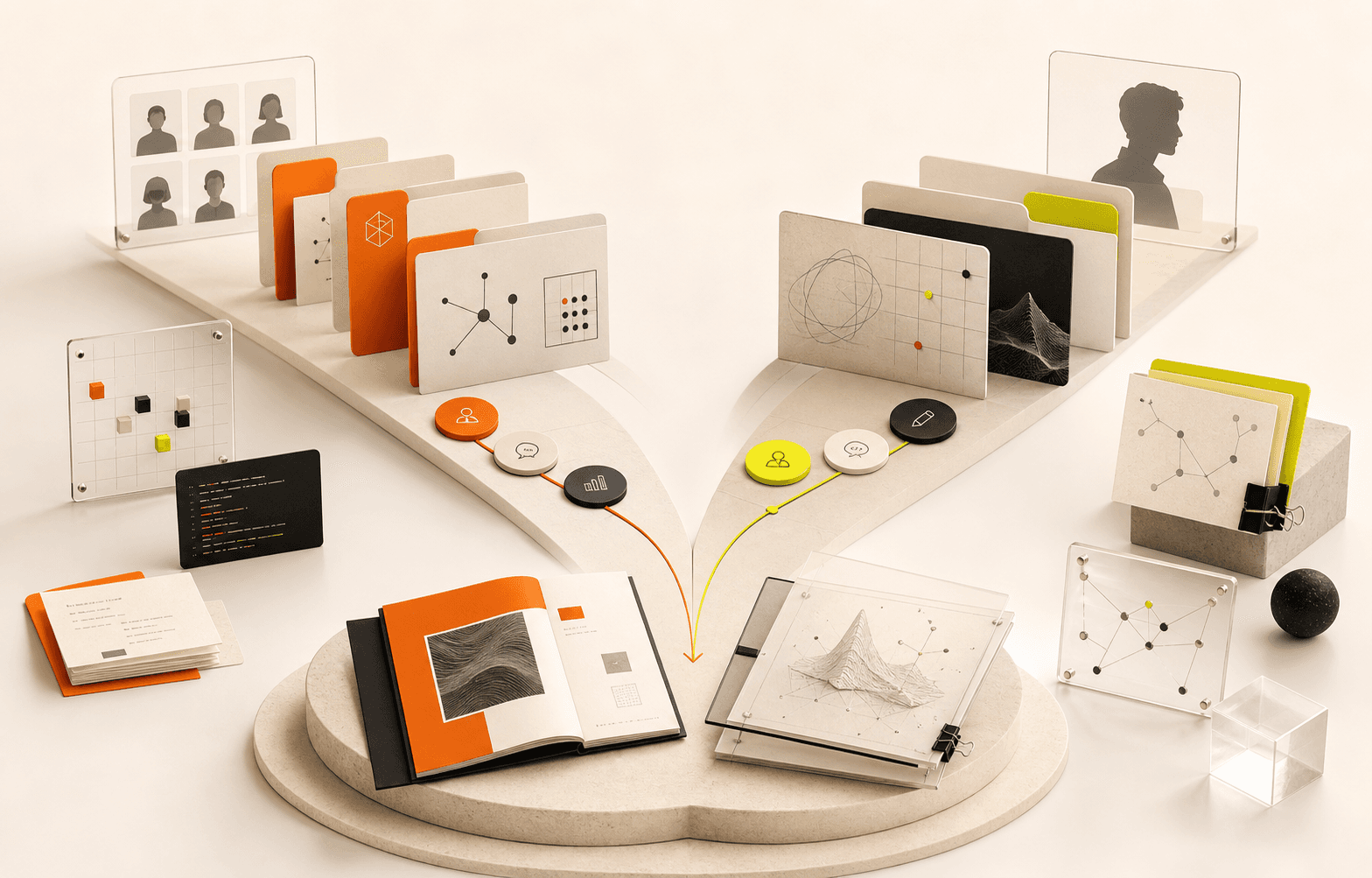
The cohort is the foundation. The Fellowship is the next mile.

The two programs are designed to stack. Nothing about the cohort is a prerequisite for the Fellowship, but it is the most common path into it.

STEP 01

Learn the foundation

Learn how modern AI systems work, along with the research design and project-scoping skills needed to make sound technical decisions.

STEP 02

Ship a track project

Enter an Applied Lab of three to five students, pick a specialist track, and finish one project you can explain end to end.

STEP 03

Go further, one to one

Bring a named target to a matched specialist and spend three to six months building the competition entry, paper, system, or product around it.

WHAT BOTH PROGRAMS SHARE

Whichever you choose, the standard does not move.

The differences are structural. The bar for the work, and who the student works with, is the same in both.

01

Mentors who have done the work

Every student works with people who have won, published, or shipped in the field they teach.

02

Visible student contribution

The standard is not a polished demo alone. The student can show what they built, how they tested it, and what changed.

03

Real technical review

Written feedback and code review between sessions, not just live time.

04

A package at the end

Code, documentation or a paper, a presentation, and a concrete plan for what comes next.

CHOOSING BETWEEN THEM

Questions families ask before applying.

If the answer you need is not here, the fit conversation covers it.

Can I do both?

Yes. AI Innovators can provide the foundation and a first substantial project; the Fellowship can then take a specific goal further with a specialist. Students who already have comparable project experience may apply directly to the Fellowship.

Which one should I apply to first?

If you are unsure, apply to AI Innovators. The application takes about five minutes and the fit conversation covers both programs — if the Fellowship is the better match for the student’s background and goal, we will say so.

Does AI Innovators require programming experience?

No. Motivated beginners complete the included Launchpad before the cohort. Students who already code can move through it quickly. The Fellowship is different: applicants should already have a substantial project or equivalent technical experience.

Does the Fellowship follow a curriculum?

No. The scope is built around the student’s target and the mentor’s field. That is the core difference between the two programs — AI Innovators teaches a common foundation, the Fellowship starts from your goal.

What if no specialist is available in my field?

We say so on the consultation call rather than assigning a generalist. Timing and specialist availability are part of the admissions conversation.

ONE APPLICATION · BOTH PROGRAMS

Not sure which one? Start the conversation.

The application takes about five minutes. We use the fit conversation to place the student in the program that matches their background and goal.

Start the application